Go in 9×9 is Awesome

As readers of the premium newsletter know, I have been playing some more go recently. In particular, thanks to the release of the book Mastering Mini Go, I have discovered how exciting go on a 9×9 board is. I feel like this faster-paced, smaller game has taught me a lot, because it is so rich in feedback. This comes from it being very unforgiving. Small-ish mistakes quickly lose the game, and that becomes clear just a few moves later.
Here are some things which 9×9 go has made me realise:
- The relaxed win requirement (called komi) White gets to compensate for Black’s first-move advantage is bigger than I thought. Black needs to really apply pressure to have a chance of winning, while White can focus more on playing a solid defense.
- Having the ability to freely decide where to play the next move (called sente or initiative) is important. Being able to take the next big point on the board after a local exchange is like getting another first-move advantage partway into the game.1 I have been using computer analysis to study variations that never happened in my games, and sometimes the computer decides to sacrifice 2–3 pieces when a more straightforward exchange would be lossless. At first I was confused about this, but then I realised the sacrifice retains the initiative.
- Retaining the initiative requires knowing when groups are settled, and not playing additional moves just to be sure. Sometimes it even requires knowing when a group is unsettled, but there is still a more important intersection to play on elsewhere on the board.
- Attacks and invasions are different things: attacks exploit weaknesses in the opponent’s groups to get free moves on the outside2 I.e. when attacking, we play forcing moves that the opponent has to respond to in some way other than by weakening the piece we just played. It lets us play a piece and have it stay strong into the next turn, rather than it being immediately weakened by the opponent., while invasions create groups inside the opponent’s territory that either survive, or at least create new weaknesses that can later be attacked.
- Invasions live by having at least two directions to run when attacked (called miai). Invasions that don’t live can still be useful: the threat of rescuing an invasion can create the potential for attacking moves on the outside of the opponent’s invaded territory.
- Weaknesses (called aji) in defensive structures can be severe. A single cutting point or one group with a few liberties might be no big deal. But when there are many bunched up, the opponent might find the one move (called tesuji) that starts a sequence that breaks open a wall and throws in question territory thought to be well-defended.
- To invade successfully, one needs a sense of when a space is too small and with insufficient aji to make an invasion possible. The amount of aji determines how small is too small, but it’s a complex, context-dependent tradeoff.
To be clear, realising something is not the same as earning the skill to use it. I can recognise when any of the above have hurt me, but I’m not yet at a level where I can deliberately use it myself to gain an advantage over my opponent.
Here are two examples of games I have played recently.
Sequencing reductions incorrectly
I lost this game, even though I was ahead in the middle of the game. At the end game, players take turns eking out small concessions from each other, and in this game I performed mine in the wrong order, allowing my opponent to fix up some of their weaknesses.
On the 9×9 board size, White wins if they manage to control 37 intersections3 The idea is that the player controlling more intersections than the other at the end of the game wins, but since Black gets a first-move advantage, we have to lower White’s requirements for winning to compensate. The way it happens in principle is through a Dutch auction: both players consider requiring only 40 intersections for White to win, then 39, then 38, etc. until one player thinks the requirement is low enough to forego the first-move advantage. In practise, though, basically everyone agrees White needs to control 37 intersections to win, so the auction never happens. at the end of the game. Since there are a total of 81 intersections, Black needs to control 45 intersections, or slightly more than half the board to win.4 There are nuances here around rule sets and scoring methods, but I’m trying to keep it simple. If you download the free sample of Mastering Mini Go, you can read Tomlinson’s clear explanation of the system used for these games.
In this game, I played as Black, and my opponent is White.
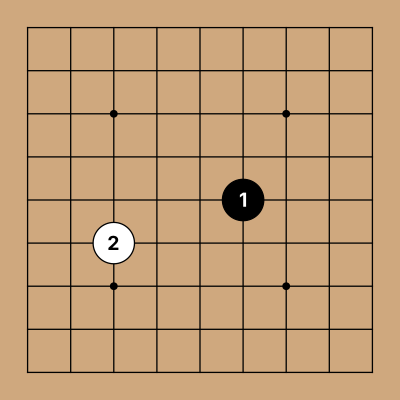
As expected from the reasoning seen, Black plays closer to the centre to get as much as possible out of the first-move advantage. White hangs back a little closer to the edges, where it is easier to build a base.
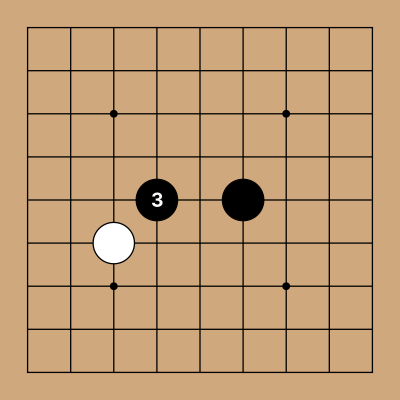
Black keeps up the aggression by threatening to disrupt White’s base-building. The approach chosen for move 3 is theoretically the best move, but it might not have been the best move for me; it is likely to lead to complex fighting that is beyond my reading abilities.
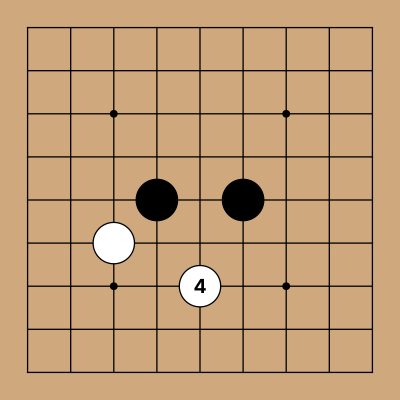
White starts to build a base. This is generally a good second move for White, because by quickly establishing one base they can afford to launch invasions if they think Black is playing too aggressively. Invading with no stable base means having to defend on two fronts at the same time.
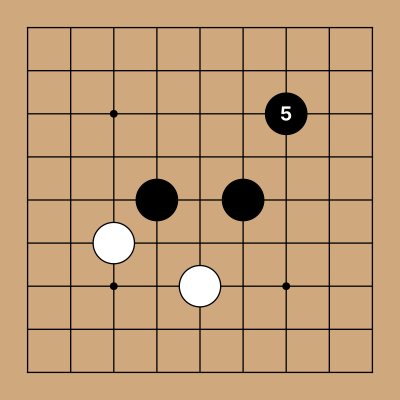
Black secures a corner. With hindsight and computer analysis, this move was too passive: it leaves both the left and lower side completely open for White to expand into. I did it because I was worried about the upcoming invasion.
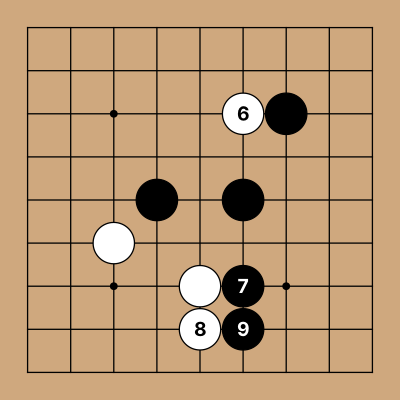
White invades. Having that one piece there to deal with the invasion, Black took the time to expand along the right side before dealing with the invasion. Computer analysis indicates the upper side is bigger and would have been more profitable to expand into, but I felt insecure and wanted to play more conservatively. I imagined I had enough of a presence in the middle of the board to handle a border clash on the upper side anyway.
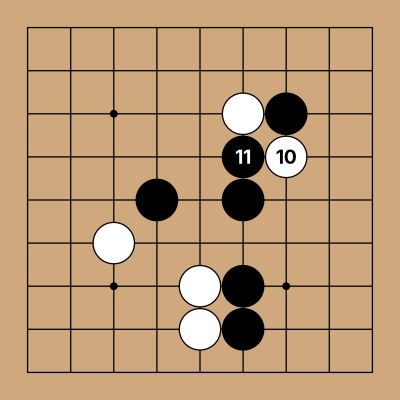
By reinforcing the invasion at the top with move 10, White missed a vital point on the lower half of the board that would have disconnected Black’s forces from each other. Black tries to not make the same mistake, and disconnects White’s invading pieces from each other.
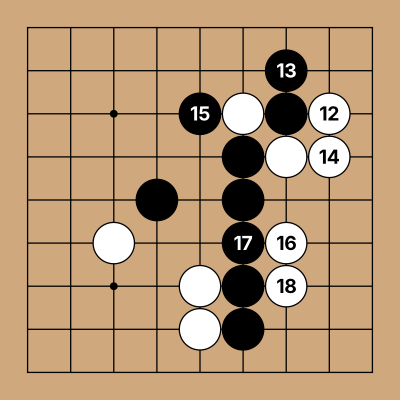
White sacrifices one piece (the one caught inside Black’s wall), in order to get a couple of forcing moves in. For example, move 16 exploited a gap in Black’s wall, forcing Black to play 17, which then let White get away with two moves (16 and 18) on the inside of Black’s wall. Had that gap in the wall not been there, White would only have been able to play one move on the inside before Black responded.
Note that the initial invading force landed along the top of the board, but White ended up establishing a base on the right. This was in part because White happened to be able to find and create weaknesses in Black’s position along the right, and in part because they were worried about the amount of territory Black was starting to control on that side.
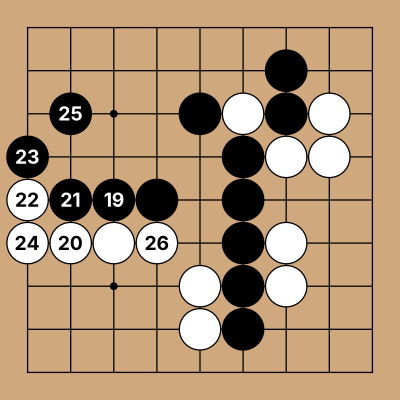
With the invasion over, Black claims the top side by threatening to reduce White’s territory in the bottom left. White defends bottom left, and lets Black control the top left.
At this point, I felt fairly comfortable as Black. It seems like White controls around 37 points which would give them a win, but! there are some holes in the White walls, and no real holes to speak of in Black’s defenses. The player with the fewer weaknesses can usually wrest a few more concessions from the one with more weaknesses in the endgame.
Computer analysis confirms Black is at least one point ahead at this time. There are two moves on the board that can unlock even more points if Black plays very cleverly, but that level of cleverness is beyond my abilities.
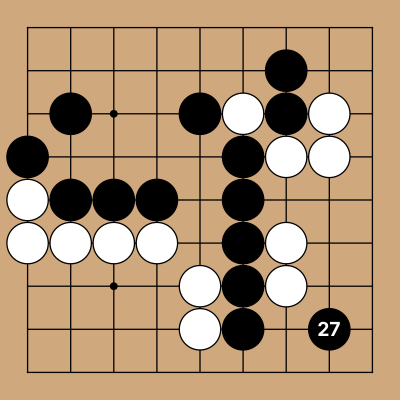
Instead of being clever, Black plays here to try to claim some of the bottom right corner – also not a bad move.
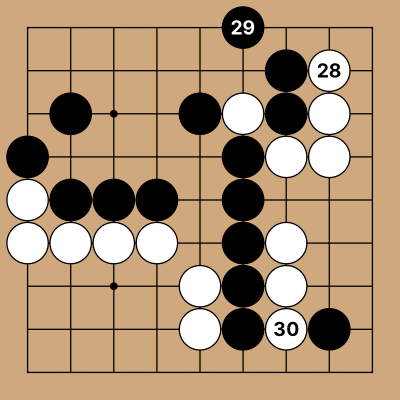
White finds an important intersection. If Black had played at 28 first, they would have had a better chance of winning the game. By playing there, White forces Black to respond with 29, and at the same time, White 28 secures control over more intersections, and lets White later fight the bottom right with more strength. After that, White threatens to cut off Black’s small force in the lower right with move 30.
At this point, I started to realise that my lead had slipped away. Many of the weaknesses White had were plugged, and White seems to control around 38 intersections, which would give them the win.
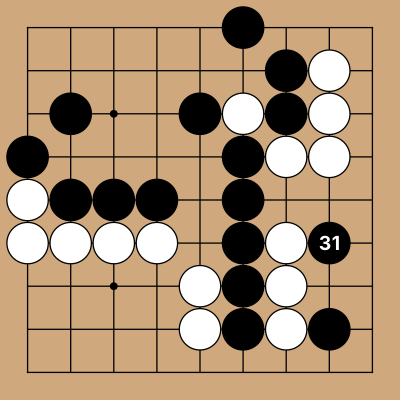
Thus Black gropes in the darkness for a clever move, but ends up not finding it. Move 31 only prompts White to fix one of the last holes in their wall.
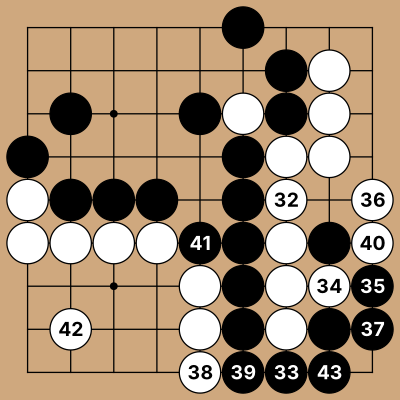
In the process of linking up Black’s forces in the bottom right, one weakness in White’s base in the bottom left was fixed (at move 38), but then at the same time another weakness was created, but it was one which White could fix easily (move 42). Black links up their forces in the bottom right, and then there are only two moves remaining on the board to firmly close up all territories.
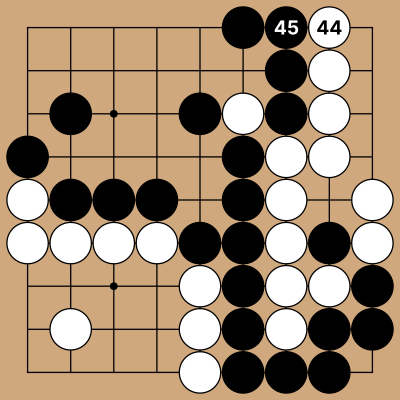
After this, White definitively controls 38 intersections (including one where Black has a dead piece) and thus wins the game with a slim margin. Well played, White.
The critical moves in the endgame were 28 and 38. Black had the opportunity to play either of them before White did, but squandered that opportunity by focusing too much on the sequence in the lower right corner.5 Why did I focus too much on that sequence? The corner looked so big and open!
Exploiting weaknesses to make life
This was a game played with rapid/blitz time control.6 Otherwise I tend to play correspondence games, making 1–2 moves per day. Thus moves relied a lot on intuition and pattern recognition, rather than careful exploration of variations.
I played as White, and my opponent, who is a little stronger than I, played as Black. I ended up winning, although in no small part due to luck.
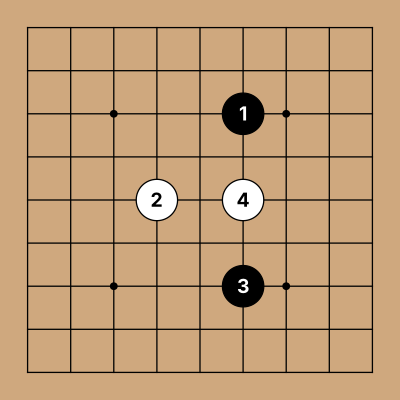
Black opens very territorially. After move 3, I’m not sure how White should respond. I end up reasoning that if White also plays territorially, then Black will win because Black has a one-move lead on claiming territory.7 This thinking may be influenced by recently reading the Getting ahead chapter of The Fundamentals of Go. Thus, White needs to come up with a way to disrupt Black’s territory grabs, and I end up playing move 4 between the two black pieces. Computer analysis confirms this was the right idea.
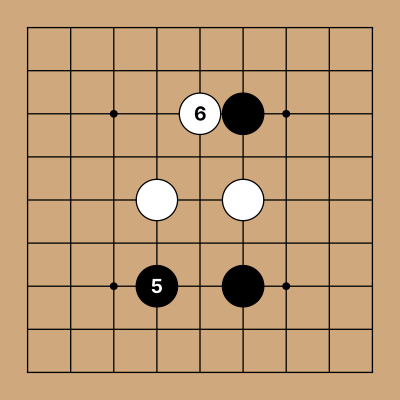
Black claims the lower side, so White attacks the weaker upper side. The idea was okay, but move 6 specifically wasn’t great, because it leaves enough weaknesses that Black can separate the white pieces into two groups.
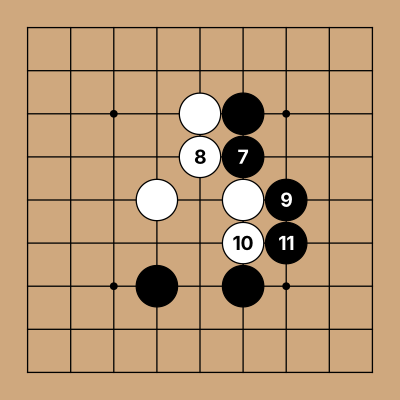
Fortunately, Black did not find the sequence to cut, and instead gave White a stronger central group. The white central group does not surround territory yet, but it also does not have many weaknesses, as opposed to Black’s formation.
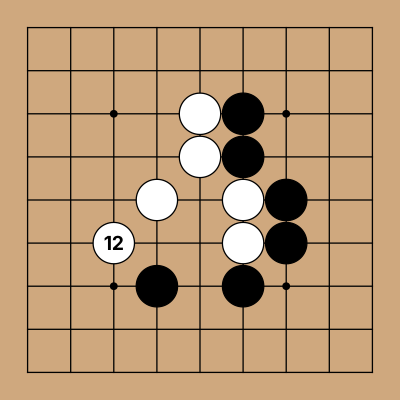
However, White ends up not exploiting those weaknesses. Since this was a fast game where I didn’t have time to count properly, I misestimated the size of the upper left corner and thought I could win just by surrounding it.8 Counting now, I realise it is five points short of a draw, even in the best case. Thus, I prompt Black to defend the bottom and give me the corner.
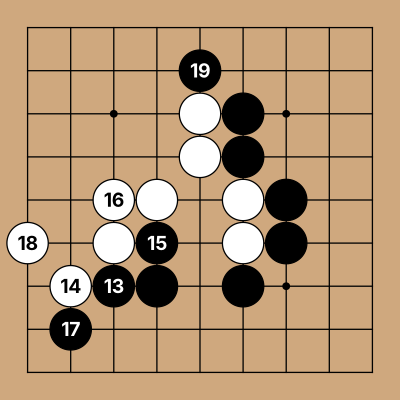
Black defends, secures the bottom part of the board, and does so while keeping the initiative, which means Black can then go on to reduce the corner at the top with move 19. At this point, I do realise the corner is way too small to win White the game.
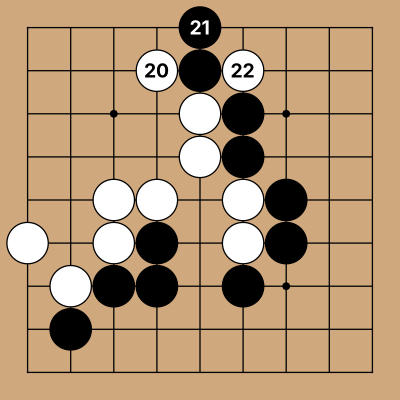
White has to block at least once. Then I panic a little and play a forcing move at 22 to get more time to think.
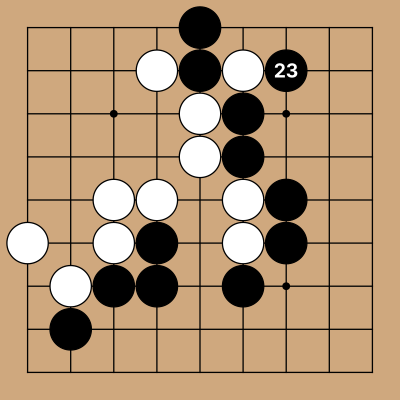
As Black defends against the cut, I look around at the board and I start to get a feeling that maybe, just maybe, there is a way to use the weaknesses in Black’s position to get some small gain somewhere.
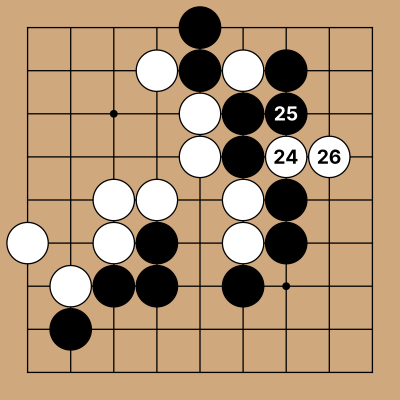
The two white pieces (24 and 26) looked to me like a serious threat to the corner. More careful analysis would show that they are dead, even if Black plays elsewhere for one move.
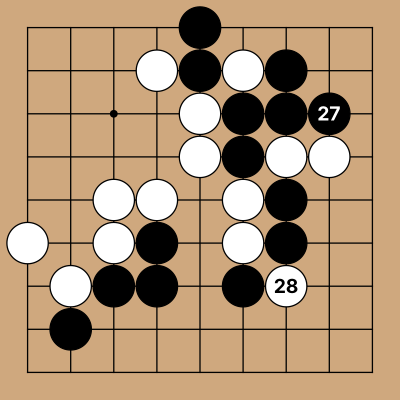
However, Black also thought the two white pieces looked menacing, and defended the corner with 25 and 27. That made it possible for White to play move 28, which Black would really have wanted to play first. By playing move 28, White threatens both the two black pieces above it, and the single black piece to the left of it.
Computer analysis reveals there is actually a specific sequence of forcing moves Black can play to reinforce the left piece without giving White time to capture the two pieces above, but neither I nor my opponent saw it.
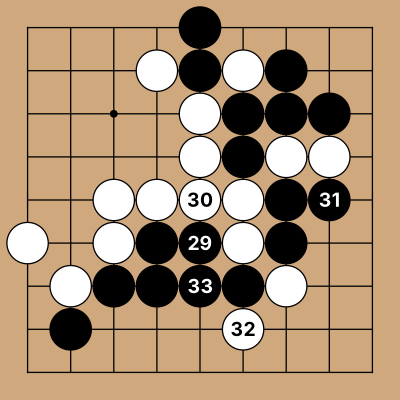
Since Black did not find a way to reinforce the single piece, White uses it with move 32 to get a corner move in without Black being able to stop it, because Black has to rescue with 33.9 After White 30, Black could have prevented White 32, but only by sacrificing the pieces saved by Black 31.
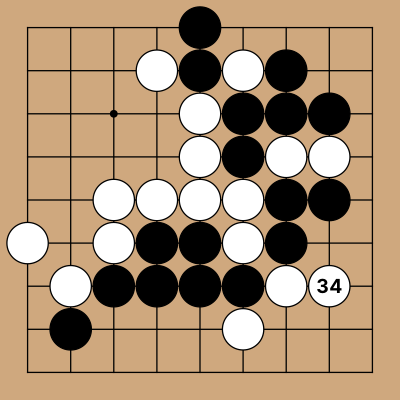
White 34 could have been more aggressive10 For example by killing the lower left black group entirely! but I was so focused on making life in the corner, I did not see the board.
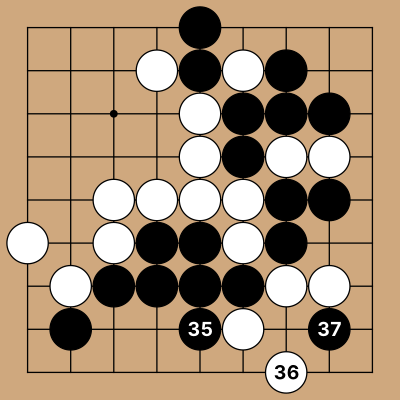
Black 37 threatens to kill the white corner group, unless White responds correctly.
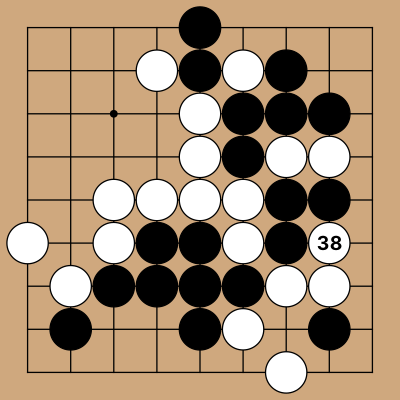
Before responding, my instict is apparently to play a forcing move to get more space. The computer doesn’t like this move, but that’s only because it gives Black the opportunity to save their lower left group by sacrificing three pieces on the right. White wins either way.
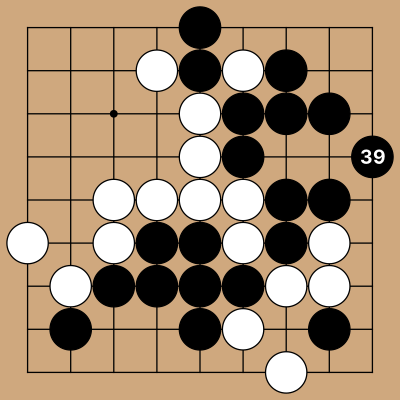
Black chooses to save the three pieces on the side, possibly not realising the lower group is in danger.
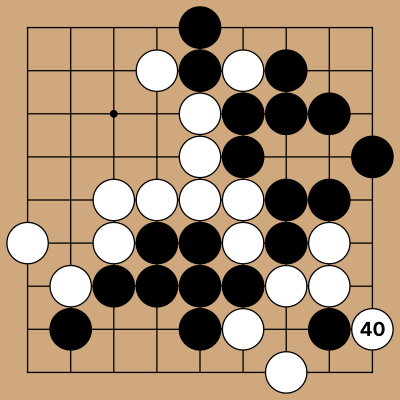
White plays the critical move to not get the corner group killed.
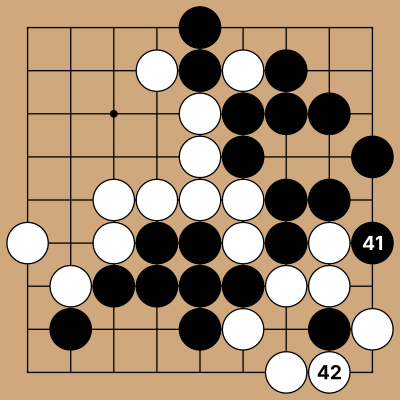
Black reduces, and White responds with the necessary move to finally make permanent life in the corner.
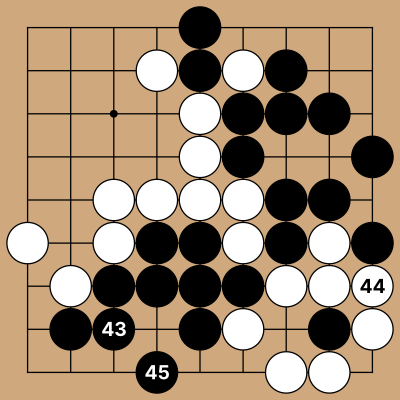
Black now realises the lower group is in danger, and fixes it up. White still had a second opportunity to kill it11 White 44 at 45., but I was still so worried about losing the corner I played an entirely unnecessary move there.
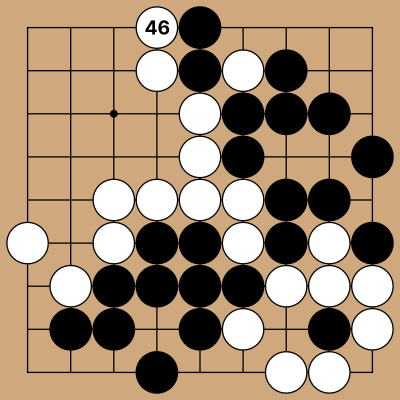
Black has some potential for reduction at the top, so White plugs that hole through a forcing move, retaining the initiative.
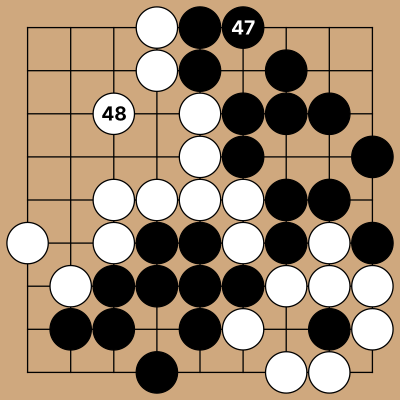
Unfortunately, when Black has responded, White plays another completely unnecessary move to protect an already sufficiently-protected cutting point. With this, White gives the initiative to Black.
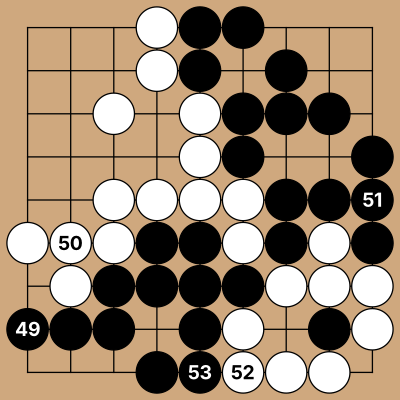
Black uses the initiative to make the remaining reduction moves, and the game ends! White needs to control 37 intersections to win, and controls 42 of them.
I realise I got very lucky in the middle game there, and squandered several opportunities for a higher score, but I’m still happy, particularly since this was against a stronger opponent.